5/31/2025, 11:07 PM
(This post was last modified: 6/1/2025, 9:29 PM by Modea.
Edit Reason: Reread the thread realized I used the word sun five times in a row. Help
)
❖
Between either woman from east and west, growing their power with every name given to the earth, Modea finds the middle passage where he must choose:
Turn towards the sea, away from the heart of the inner continent; or press in.
The man on the hill is choosing, too. Lumbering, irreverent. He eclipses the rising sun, and Modea recognizes that cloying diesel-soaked molasses:
(Peat; fields upon fields of it, burning. Enough of it to blanket the sky, ionize the air, spewing from a red crease on the horizon.)
A mayfly thrashes against the constriction of a sundew. Modea’s claw lands barely ahead, sparing it.
(‘You didn’t know?’ asks a dog to a wolf.)
It continues to struggle.
(The dog’s oldest masters burned this land to revive the underbrush, the ones after clearing its trees, heating their homes, making way for tinderbox gorse. This land has been carved, fired, sculpted, hollowed then filled.)
First the holly, then the plum, now: the oil they will become if they lie in this peat, sink down, press into a fossil.
(There are no fire hawks in North America. The wolf, having known flame only when lightning struck true, learns to rush headlong into his scorching planet and pluck fleeing rabbits from their dens.)
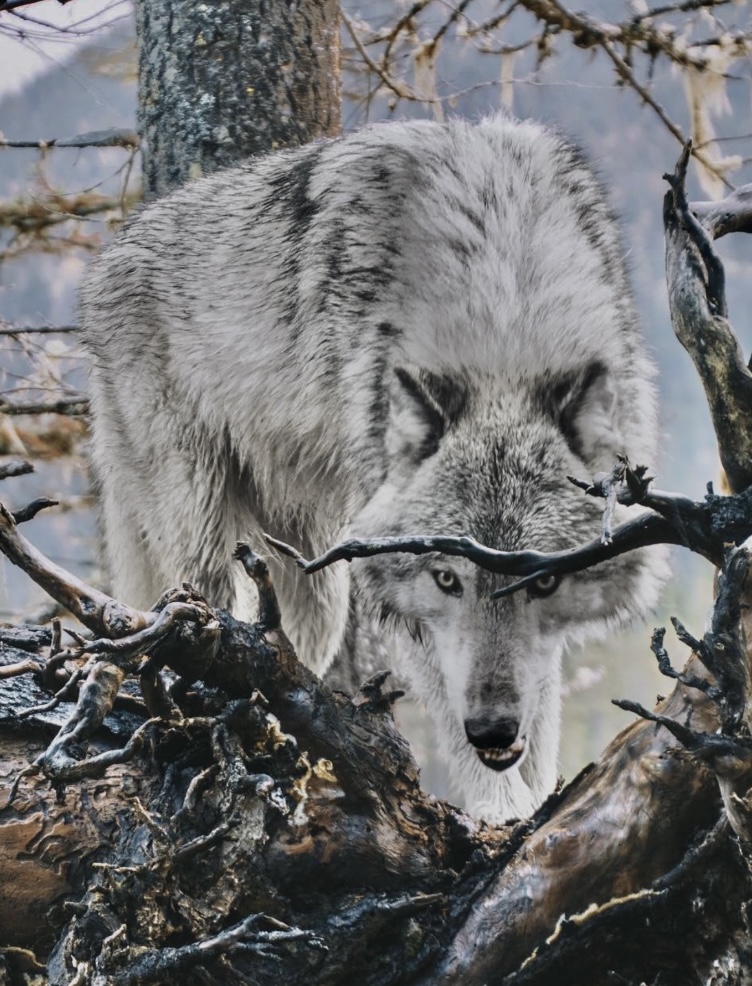
Modea prepares to meet the man at the foot of the hill in the valley below. Fur streaked with mud in the little bog where he’s taken a frog into his jaws.
Languid, waiting calmly, the little creature sitting alive between unclenched teeth. He is ready, disarming, even from this vantage where the man darkened against the sky is as unknowable as a whorling sunspot.
Turn towards the sea, away from the heart of the inner continent; or press in.
The man on the hill is choosing, too. Lumbering, irreverent. He eclipses the rising sun, and Modea recognizes that cloying diesel-soaked molasses:
(Peat; fields upon fields of it, burning. Enough of it to blanket the sky, ionize the air, spewing from a red crease on the horizon.)
A mayfly thrashes against the constriction of a sundew. Modea’s claw lands barely ahead, sparing it.
(‘You didn’t know?’ asks a dog to a wolf.)
It continues to struggle.
(The dog’s oldest masters burned this land to revive the underbrush, the ones after clearing its trees, heating their homes, making way for tinderbox gorse. This land has been carved, fired, sculpted, hollowed then filled.)
First the holly, then the plum, now: the oil they will become if they lie in this peat, sink down, press into a fossil.
(There are no fire hawks in North America. The wolf, having known flame only when lightning struck true, learns to rush headlong into his scorching planet and pluck fleeing rabbits from their dens.)
Modea prepares to meet the man at the foot of the hill in the valley below. Fur streaked with mud in the little bog where he’s taken a frog into his jaws.
Languid, waiting calmly, the little creature sitting alive between unclenched teeth. He is ready, disarming, even from this vantage where the man darkened against the sky is as unknowable as a whorling sunspot.
❖